Viber
Viber
 Telegram








Content
- Introduction
- Who Needs an RRO or PRRO?
- What Qualifies as a Payment Transaction?
- Is an RRO Required for Individual Entrepreneurs Depending on Their Tax Group?
- Cash Register, RRO, or PRRO: What Should an Individual Entrepreneur Choose?
- When an RRO or PRRO May Not Be Required
- What Liability Applies for Violations?
- What Should an Individual Entrepreneur Do If a Cash Register Is Required?
In 2026, whether an individual entrepreneur needs a cash register depends on their tax group, payment methods, and type of business activity. An RRO or PRRO is mandatory for individual entrepreneurs in tax groups 2–4 and those on the general taxation system if they accept cash, card payments, or payments through payment services. Individual entrepreneurs in Group 1 and those who receive payments exclusively via IBAN can operate without a cash register.
Let’s take a closer look at the requirements for using an RRO or PRRO.
Who Needs an RRO or PRRO?
Using a cash register (RRO or PRRO) is mandatory for all individual entrepreneurs in tax groups 2–4 and entrepreneurs on the general taxation system if they carry out payment transactions. Only Group 1 individual entrepreneurs and those who accept payments exclusively by bank transfer using account details (a direct account-to-account IBAN transfer) can operate without an RRO.
In 2026, the rules for using RROs and PRROs by individual entrepreneurs have become more structured. To avoid fines and misunderstandings with the tax authorities, entrepreneurs need to understand in advance when a cash register is mandatory and when they can operate without one.
What Qualifies as a Payment Transaction?
A payment transaction is the acceptance of payment from a customer in cash, by payment card, or through a payment service. Payment transactions that require a fiscal receipt include:
- cash payments;
- card payments through a POS terminal;
- payments through internet acquiring or payment intermediaries (LiqPay, WayForPay, NovaPay, etc.);
- cash-on-delivery payments received by the seller when the goods are handed over.
A transfer using IBAN details — directly from one account to another, without the involvement of payment intermediaries — is not considered a payment transaction. In this case, a receipt is not required.
Is an RRO Required for Individual Entrepreneurs Depending on Their Tax Group?
1️⃣ Group 1 Individual Entrepreneurs
Group 1 individual entrepreneurs have a special status regarding the use of RROs and PRROs, as the law provides them with the most exemptions.
Individual entrepreneurs under the Group 1 simplified taxation system may choose not to use an RRO or PRRO, provided they meet the criteria for remaining in this tax group (type of business activity, income limit, and no employees). This is expressly provided for by Clause 296.10 of the Tax Code of Ukraine.
The exemption from using an RRO/PRRO applies regardless of the payment method. An entrepreneur may accept both cash and non-cash payments without using a cash register, provided they remain within the permitted types of activity for Group 1.
Entrepreneurs engaged in retail trade in rural areas may also operate without an RRO/PRRO. However, they must maintain a settlement book (RK), a book of settlement transactions records (KORO), and meet the following conditions:
- not conduct online sales;
- operate in premises where excise goods are not sold;
- the village or settlement council has not adopted a decision requiring the entrepreneur to use an RRO/PRRO;
- the turnover limit per structural unit is 167 minimum wages.
2️⃣ Group 2 Individual Entrepreneurs
Group 2 individual entrepreneurs are required to use an RRO or PRRO when carrying out payment transactions. This requirement does not depend on the type of business activity, business format, or income level and is provided, in particular, by Article 3 of the Law of Ukraine “On the Use of Registrars of Settlement Transactions”.
An RRO or PRRO is mandatory if an entrepreneur:
- accepts cash payments from customers;
- receives card payments through POS terminals;
- accepts non-cash payments through financial companies and payment intermediaries (NovaPay, LiqPay, WayForPay, etc.);
- receives funds with payment codes 2924, 2650, and 2654, which indicate payment transactions in the account statement and are subject to fiscalization.
The use of an RRO/PRRO is not mandatory if a Group 2 individual entrepreneur provides remote services (online courses, consultations) with payment made exclusively to an IBAN account (bank-to-bank) without the involvement of payment intermediaries, or if payment is made through Ukrposhta.
3️⃣ Group 3 Individual Entrepreneurs
Group 3 individual entrepreneurs are required to use an RRO or PRRO when carrying out payment transactions. The requirement depends not on the taxation system, but on the way they interact with customers and accept payments.
An RRO or PRRO is required if an entrepreneur:
- provides goods or services during personal contact with a customer (retail trade, salon services, catering, etc.);
- accepts cash payments;
- receives payments through a POS terminal or payment services;
- conducts online sales and accepts payments by card or through payment intermediaries;
- refunds money to a customer.
An RRO/PRRO is not required if services are provided entirely remotely with online payment and no physical contact with the customer, payments are received through job-search platforms or service marketplaces without a conventional payment transaction, or funds are transferred directly to an IBAN account without the involvement of payment services.
4️⃣ Group 4 Individual Entrepreneurs and the General Taxation System
Group 4 individual entrepreneurs are not required to use an RRO or PRRO if their business activity does not involve payment transactions. If payments are received exclusively in non-cash form — by bank transfer to a current account — the use of cash register equipment is not mandatory.
An RRO or PRRO becomes mandatory if a Group 4 individual entrepreneur accepts cash, receives card payments through a POS terminal, or uses payment services or financial intermediaries.
Unlike entrepreneurs on the simplified taxation system, individual entrepreneurs on the general taxation system are required to use an RRO or PRRO whenever they carry out payment transactions — the legislation does not provide them with any exemptions or simplified rules. If a transaction falls under the definition of a payment transaction, it is subject to mandatory fiscalization regardless of the type of business activity or payment amount.
Cash Register, RRO, or PRRO: What Should an Individual Entrepreneur Choose?
An RRO is a traditional cash register with built-in fiscal memory, while a PRRO is a software solution for a smartphone, tablet, or computer. For most individual entrepreneurs in 2026, a PRRO is a more flexible and cost-effective alternative: it does not require purchasing equipment, supports electronic receipts, and is easier to scale.
A detailed comparison of costs, registration, offline operation, and selection scenarios is available in the article “RRO vs. PRRO: What Is the Difference and Which Should an Individual Entrepreneur Choose?”.
When an RRO or PRRO May Not Be Required
- Group 1 individual entrepreneurs — provided they meet the criteria for remaining in this tax group.
- Entrepreneurs in rural areas who sell goods other than excise products and do not exceed the turnover limit (167 minimum wages per structural unit).
- Payments made exclusively by transfer using IBAN details, without the involvement of payment intermediaries.
- Payments made through Ukrposhta.
What Liability Applies for Violations?
Since October 1, 2023, fines for violations of the rules governing the use of registrars of settlement transactions have been fully reinstated in Ukraine. Financial penalties apply if an entrepreneur:
- does not use an RRO or PRRO when carrying out payment transactions;
- carries out transactions for an incomplete amount (understates the value of goods or services on the receipt);
- fails to issue a fiscal receipt to the customer.
The fines amount to 100% of the value of the goods or services sold for the first violation and 150% for each subsequent violation. Separate fines are provided for using an expired or unregistered RRO, failing to issue an electronic fiscal receipt, and incorrectly completing mandatory receipt details.
What Should an Individual Entrepreneur Do If a Cash Register Is Required?
Check your tax group and payment methods.
Choose an RRO or PRRO.
Register the point of sale, cash register, and cashier.
Set up products, taxes, and payment types.
Start issuing receipts.
To avoid fines, individual entrepreneurs should already:
- check whether their payment transactions are subject to mandatory fiscalization;
- register an RRO or PRRO before starting sales;
- check that fiscal receipts are generated correctly;
- check that the PRRO correctly transmits fiscal data to the tax authorities.
Timely preparation and choosing the right cash register format will help entrepreneurs operate legally, avoid financial risks, and reduce unnecessary inspections.
If a modern software-based RRO is sufficient for most entrepreneurs, it is worth choosing a solution that not only helps meet legal requirements but also simplifies day-to-day operations. Vchasno.Kasa combines fiscalization, sales analytics, individual entrepreneur limit monitoring, integrations, and expert consultations in a single service.
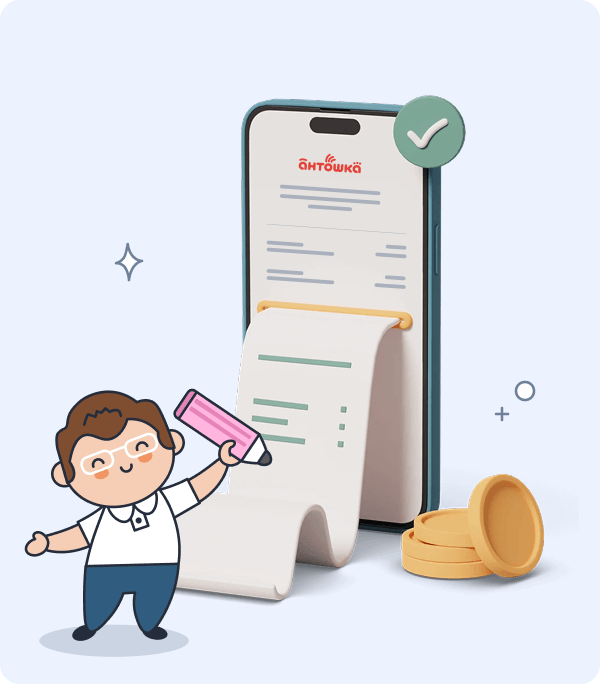
Try advanced PRRO features from Vchasno.Kasa
✅ Analyze sales of goods and services
✅ Get free consultations with a tax expert
✅ Collect customer feedback through receipts
✅ Brand your receipts
✅ Track the financial limits of your individual entrepreneur account