Viber
Viber
 Telegram








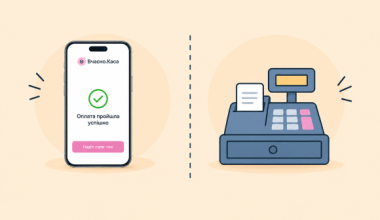
RRO and PRRO perform the same primary function — they fiscalize payment transactions. The difference lies in how they are organized and what equipment they operate on.
Let’s take a closer look at how a traditional cash register differs from a software-based cash register and which option is more convenient for different business scenarios.
What Are RRO and PRRO in Simple Terms?
Ukrainian Law No. 265/95-VR allows entrepreneurs to register payment transactions using an RRO or PRRO. However, there are differences between the two.

What Is an RRO?
An RRO is a physical cash register specifically designed to fiscalize payment transactions. Its operation requires appropriate equipment and technical maintenance.

What Is a PRRO?
A PRRO is a software-based registrar of payment transactions. It is a software solution that allows payment transactions to be fiscalized from a computer, tablet, or smartphone. Compared with an RRO, it is a more cost-effective and mobile solution. It can be used for mobile sales or providing services on-site.
For day-to-day operations, a PRRO usually transmits data to the tax service server via the internet immediately after each receipt is issued. However, this does not mean that the cash register “stops” when there is no connection. A PRRO can operate offline under the conditions provided by law. For example, Vchasno.Kasa supports cash register operation during temporary internet outages.
A PRRO can issue both printed and electronic receipts to customers. To issue a printed receipt, the seller additionally uses a printer.
What Is the Difference Between an RRO and a PRRO?
| Criterion | RRO | PRRO |
| Solution format | Physical device | Software installed on a computer, tablet, or smartphone |
| Getting started | Purchasing and fiscalizing the device takes time | Online registration and quick setup |
| Equipment | Cash register, fiscal module, and sometimes a printer | Smartphone, tablet, or computer; printer is optional |
| Cost | Equipment purchase + service and maintenance | Software subscription, with no additional cash register equipment costs |
| Registration | With the tax service | Online, through the State Tax Service taxpayer portal or a provider |
| Receipts | Paper | Paper (with a printer) and electronic |
| Offline mode | Autonomous operation without an internet connection | Autonomous operation without an internet connection |
| Integrations | Limited | CRM systems, accounting systems, marketplaces |
| Suitable for | Scenarios where specialized cash register equipment is required | Mobile sales, services, online sales, and scenarios involving software integrations |
Whether an RRO or PRRO is mandatory depends on the individual entrepreneur’s tax group, type of business activity, and payment method. For a detailed breakdown by tax group, exceptions, and fines, see the article.
Benefits of a Software-Based RRO for Small Businesses
Statistics show that most individual entrepreneurs prefer software-based RROs:
More than 1 million payment transaction registrars (RROs/PRROs) are operating in Ukraine. Their number increased by 11% in 2025. 80% of them are software-based (PRROs).
💻 Work from a Web Cabinet or Mobile App
A PRRO can be used on tablets or smartphones with internet access. It is suitable both for stationary retail outlets and for mobile sales or providing services at a customer’s location. The cash register can be managed through a web cabinet or mobile app, depending on where it is more convenient for you to work.
🔗 Integrations with CRM Systems, Accounting Systems, and Marketplaces
A PRRO can be integrated with accounting systems, CRM systems, online stores, and other services. This makes it possible to automatically transfer sales data and avoid duplicating transactions manually.
More about Vchasno.Kasa integrations
📲 Electronic Receipts for Customers
A PRRO can issue customers both paper receipts (if a printer is connected) and electronic receipts — customers receive them immediately via messenger, email, or a QR code.
📶 Offline Operation
If the internet connection is temporarily lost, modern PRROs do not block receipt issuance: the cashier can continue working, and the data is transmitted to the State Tax Service server as soon as the connection is restored.
A PRRO also provides other benefits, including savings on equipment, automatic software updates, less paperwork, and cloud data storage, which reduces the risk of data loss.
When Is It Better to Choose an RRO and When a PRRO?
- Online store. If it accepts online payments, works with courier delivery or cash on delivery, a PRRO is more convenient because it is not tied to a specific point of sale and can be easily integrated with payment services and marketplaces.
- Self-employed professional or small service provider (hairdresser, tutor, nail technician). A PRRO on a smartphone allows a receipt to be issued immediately on-site, without stationary equipment.
- Retail outlet with a large and steady flow of customers. Both an RRO and PRRO can be suitable here — the choice depends on the stability of the internet connection at the premises and the need to integrate with the store’s accounting system.
- Business with several cash registers. A PRRO may be more convenient for scaling: a new cash register can be registered online and immediately connected to a shared accounting cabinet.
- Chain or business with complex local infrastructure. It is worth considering cloud-based PRRO solutions with centralized cash register management, or a combination of RROs and PRROs depending on the specific point of sale.
How to Start Using a PRRO
Determine the need and operating format.
Register or import the cash register.
Set up cashiers, products, and payment methods.
Start issuing receipts.
PRRO providers develop their solutions based on customer needs. For example, Vchasno.Kasa provides individual entrepreneurs with additional options: registering a cash register online and starting to issue receipts on the same day, connecting a PRRO to virtually any payment terminal, managing product inventory, and issuing receipts for prepayments.

Software RRO Vchasno.Kasa
✅ 30 days of free access
✅ Registration of PRRO in 1 day
✅ Stable operation under any conditions
✅ Automatic receipt issuance
✅ Auto-closing of shift and sending of report