Telegram








Content
- Introduction
- Legal Status of eTTN
- The eTTN System
- How Will the State Service for Transport Safety Inspect eTTNs?
- Alignment with the e-CMR Format: Moving Toward European Standards
- eTTN Issues That Concern Businesses
- Roadmap for 2026: Key Milestones
- How Businesses Can Prepare for the Transition to eTTN: A Checklist
The implementation of the electronic consignment note (eTTN) in Ukraine is gradually moving from an experimental phase to a permanent operating model. On January 30, the Ministry for Communities and Territories Development of Ukraine held an open meeting with businesses, digital service operators, and IT teams, where it presented the current state of eTTN implementation, key challenges, and a clear action plan for 2026.
In this article, we outline the key achievements of the state in implementing eTTN, the roadmap for 2026, and how businesses can already start preparing for the transition to electronic consignment notes.
Legal Status of eTTN
The electronic consignment note has the same legal force as a paper consignment note. This became possible after the adoption of the Resolution of the Cabinet of Ministers of Ukraine No. 629, which introduced amendments to cargo transportation rules within the framework of the eTTN pilot project.
The key condition is that the eTTN must be created and registered in the state eTTN system. Only in this case is it considered a fully valid official document and can be used at all stages of cargo transportation without paper duplication. Printouts from internal accounting systems or PDF files that are not registered in the system have no legal force.
The eTTN System
All parties involved in transportation (shipper, carrier, and consignee) work with consignment notes within the eTTN system. The operating procedure of the system is approved by Order of the Ministry for Communities and Territories Development of Ukraine No. 1491, which came into force on March 20, 2025.
⚙️ Technical Status of the System
The developers have fully aligned the data format with legislative requirements. The project’s technical team is currently completing final improvements:
- eliminating technical discrepancies identified during practical testing;
- preparing the system for high loads (millions of transactions per month).
🌐 eTTN Operators: EDI Connection Status
As of January 2025, more than 15 eTTN operators have joined the project, including Vchasno. Most participants are currently undergoing accreditation. The Vchasno.TTN service has already passed accreditation and is operating in the production environment of the eTTN system.
Operator connection to the system is carried out in stages. Currently, operators are at one of the following stages:
- full access — operation in the production environment and registration of eTTNs in the Central Database (CDB);
- finalizing connection — technical integration and execution of agreements with the state;
- testing — operation in the system’s test environment;
- preparation of document packages for connection.
The Vchasno.TTN service has full access to the system and registers electronic consignment notes in the Central Database.
If a company has its own digital infrastructure for integration, it can connect directly to the eTTN system.
How Will the State Service for Transport Safety Inspect eTTNs?
Employees of Ukrtransbezpeka view electronic consignment notes registered in the Central Database through the SSTB inspector’s dashboard. This allows inspectors to verify eTTNs during roadside inspections. The state plans to implement a similar control system for the National Police.
To access the dashboard, an SSTB employee must complete a registration procedure. The dashboard administrator can confirm the registration of new Ukrtransbezpeka employees or block access for those who have lost their authority.
During roadside checks, drivers present the eTTN on a smartphone, tablet, or other device. This fully complies with the Law of Ukraine on Electronic Documents and Electronic Document Management.
Electronic consignment notes that are not registered in the Central Database, as well as printouts of internal TCN forms generated in company accounting systems, are not considered official cargo documents. Their use entails fines.
Alignment with the e-CMR Format: Moving Toward European Standards
In the long term, the eTTN project envisages Ukraine’s integration into the European Union’s unified electronic consignment note system — e-CMR. This will allow cargo transportation across Europe using a single document.
Currently, there are discrepancies between Ukrainian and European standards in terms of weight measurement units:
- in Ukraine — tonnes (regulatory standard);
- in the e-CMR format — kilograms.
By May 2026, cargo weight in eTTNs will be measured in kilograms. The state will make a final decision after analyzing testing results and will formalize it in legislation.
eTTN Issues That Concern Businesses
Several unresolved issues remain in working with electronic consignment notes, including:
- Adjustment Acts. During transportation, unforeseen situations may arise that require prompt changes to consignment note data (for example, changes in cargo, unloading location, or vehicle replacement).
The state is actively developing mechanisms to amend data “in the field” using adjustment acts. - Offline Mode. Currently, creating and signing an eTTN requires internet access, which can be problematic in areas with unstable or no coverage. This creates risks of logistics process interruptions.
The Ministry is seeking an effective technical solution that will allow electronic consignment notes to be created and signed even in the complete absence of an internet connection. - Qualified Electronic Signatures for Drivers. For cargo transportation, customers often use independent carriers and cannot issue official corporate QES certificates to drivers for working with eTTNs. The situation is further complicated by the fact that some drivers do not use QES at all.
The state plans to simplify the procedure for drivers to sign eTTNs. They will be able to use more accessible and convenient electronic signature tools, such as a personal individual signature, a bank key, or Diia.Signature.
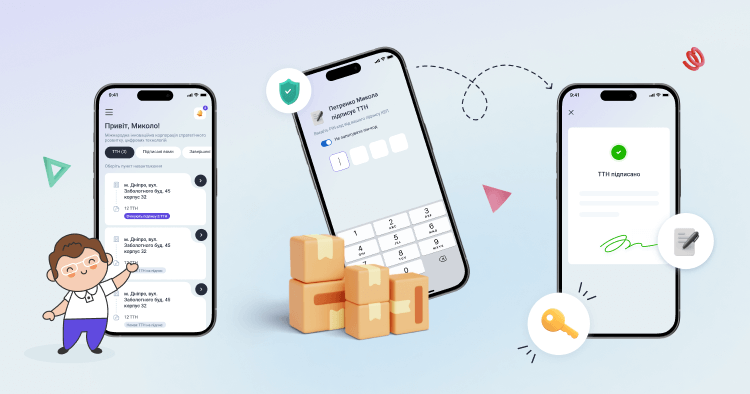
Throughout 2026, the Ministry for Restoration and relevant authorities will work on resolving these issues to make the transition to eTTN as smooth as possible for businesses.
Roadmap for 2026: Key Milestones
The transition from an experimental phase to permanent use of eTTN is taking place across three areas:
1. Technical Stabilization — further development of the eTTN system. In the near future, the state plans to complete the development of all types of adjustment acts. By the end of 2026, the creation of specialized eTTN forms is planned.
2. Regulatory Framework. In parallel with technical implementation, a draft law is being prepared that provides:
- formal recognition of eTTN as the primary form of consignment note;
- mandatory use of eTTN starting from January 1, 2027.
A new draft resolution of the Cabinet of Ministers of Ukraine on the functioning of the eTTN system is also under preparation.
3. Business Readiness. Preparing companies for the transition to eTTN.
🗓️ Key dates:
- by 28.02.2026 — update of the eTTN XSD considering testing and versioning;
- by 28.02.2026 — approval of the pricing model with operators;
- by 30.03.2026 — completion of development of all adjustment acts;
- 01.04.2026 — tentative launch of the modernized system;
- by 01.06.2026 — completion of the transition period for businesses;
- by the end of 2026 — creation of specialized eTTN forms.
The state plans to introduce mandatory use of eTTN from January 1, 2027. A separate transition period will be provided for specialized forms.
How Businesses Can Prepare for the Transition to eTTN: A Checklist
Throughout 2026, companies involved in cargo transportation should prepare for upcoming changes. This checklist will help you consistently implement the necessary steps for a successful transition to electronic consignment notes.
A Checklist
Review internal company processes. Define who creates and signs eTTNs.
Align usage scenarios. Plan how adjustment acts will be used in cases of cargo returns, data reconciliation, and similar situations.
Check availability of QES. Issue or renew QES keys for all process participants.
Train drivers. Teach them how to sign eTTNs and present documents to SSTB inspectors.
Configure IT systems. Check your eTTN operator’s connection status and perform test document exchanges.
Electronic consignment notes may become mandatory for businesses in the near future. The year 2026 is critical for adapting companies involved in cargo transportation. The best strategy now is not to wait for deadlines, but to start adjusting processes today.
The Vchasno.TTN team is always ready to assist with integration and recommend optimal solutions tailored to your logistics routes.

Start working with eTTN
The Vchasno.TTN team will help you with connection, integration, and all the nuances of the transition.
Join Vchasno.TTN