Viber
Viber
 Telegram








Most online stores already use CRM systems. This helps them keep track of leads, respond to customers faster, and maintain control over all orders. At first glance, the sales process seems well organized and stable.
However, in practice, even in such businesses there is often one area that falls outside automation — payment fiscalization. And this is exactly where unnoticed errors, extra manual work, and financial risks begin to appear.
Typical problems without CRM and checkout integration
When a CRM and a checkout system are not integrated, the order processing workflow is effectively split into two separate stages.
In the CRM, the manager creates the order, communicates with the customer, and records the payment. But to generate a receipt, they have to switch to another system, find the order, and enter the data manually.
In day-to-day work, these look like small additional actions. But this is exactly where the main problems arise. A manager may postpone generating a receipt, especially when there is a high volume of orders. Some payments, including cash on delivery, may not go through the checkout system at all. Data has to be transferred manually, and this process is prone to errors.
Over time, these issues accumulate. There is no longer a clear understanding of which transactions were fiscalized and which were not. Part of the process remains dependent on human actions, even if other stages are already automated.
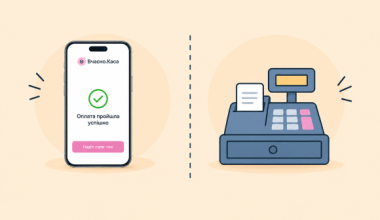
When the CRM is integrated with Vchasno.Kasa, this gap disappears. After payment, the system automatically transfers the data to the checkout service, generates a fiscal receipt, and registers it with the tax authorities.
The manager does not need to switch between systems or manually control this stage. Fiscalization becomes part of the same workflow in which the order is created and processed.
As a result, every payment is immediately accompanied by a receipt, and the risk of missed transactions disappears along with manual work.
What the process looks like when systems work together
When CRM, payments, and checkout are combined, the logic of work itself changes — all actions become a single continuous sequence without breaks.
Let’s look at this using the example of integrating Vchasno.Kasa with the SITNIKS CRM (a system for small and medium-sized businesses that manage sales through social media, messengers, and marketplaces).
In this setup, the SITNIKS CRM acts as the main working environment. It collects orders from multiple channels — Instagram, Telegram, Viber, WhatsApp, Prom, Rozetka, TikTok, and the website — and allows teams to manage them in one place.
The manager sees the entire communication history with the customer, creates orders, updates their status, and monitors execution. All these actions happen within a single system, without the need to switch between tools.
A separate role in this process is played by the SITNIKS Pay module. It allows the manager to generate a payment link directly in the CRM and immediately send it to the customer via chat, messenger, or a standard phone message. After payment, the system records the transaction and updates the order status.
The process does not stop there. Payment data is transferred to Vchasno.Kasa, where a fiscal receipt is generated, registered with the tax authorities, and made available for sending to the customer.
As a result, all stages are connected: order → payment → receipt → tax registration. Receipt generation does not require separate actions and does not depend on whether the manager returns to it later.
The role of Vchasno.Kasa in this process
The fiscalization stage is most often the weakest point in sales. Even when orders are processed quickly and payments are already recorded in the CRM, the receipt is often created separately — manually or with a delay.
Vchasno.Kasa addresses exactly this part of the process. It does not change how managers work and does not introduce additional steps. Its role is to ensure that every payment is automatically completed correctly from an accounting perspective.
For the business, this means that fiscalization is no longer a separate stage that needs to be monitored.
As a result:
- situations where a payment is received but no receipt is created do not occur
- there is no need to return to the order later
- every transaction follows the same logic without exceptions
In practice, Vchasno.Kasa closes the final stage of the sale — the one that directly affects legal compliance and the financial security of the business.
What penalties businesses face without fiscalization
In addition to operational efficiency, fiscalization also helps avoid financial risks.
According to Ukrainian legislation, conducting transactions without using an RRO or a software-based PRRO leads to penalties:
- 100% of the value of the goods for the first violation
- 150% of the value of the goods for each subsequent violation
In e-commerce, these risks can be significant. For example, if the average order value is 1,200 UAH and the business processes around 300 orders per month, the monthly turnover is approximately 360,000 UAH.
In the event of an inspection, even a portion of non-fiscalized transactions can result in fines amounting to tens of thousands of hryvnias.
By integrating CRM, the SITNIKS Pay payment module, and the Vchasno.Kasa checkout service, businesses can build a sales process where orders, payments, and fiscalization operate as a single system. This not only automates managers’ work but also minimizes the risk of financial violations.
Conclusion
For modern online stores, it is important not only to receive orders but also to properly organize the entire sales process. When CRM, payments, logistics, and fiscalization operate separately, the team spends more time on routine tasks, and the risk of errors increases. That is why more and more businesses are moving to a model where all these processes are combined into a single system.
Integrating CRM, payment services, and a software-based checkout system allows a significant part of operational work to be automated: managers process orders faster, payments are recorded automatically, and fiscal receipts are generated without manual actions.
Vchasno.Kasa closes the fiscalization stage and turns payment into a completed transaction from an accounting perspective. Transaction data is transferred automatically, the receipt is generated and registered with the tax authorities without manager involvement, and the risk of missed transactions disappears.

Prepare your cash register for the digital transition
Get 30 days of free access to set up your POS system and see how the service works for your business
Try now
Special offer for Vchasno.Kasa users from SITNIKS
For entrepreneurs looking to build a similar system, the SITNIKS team is offering free implementation of basic CRM integrations, including payment processing and fiscal reporting. Receive:
- a ready-to-use CRM workflow in just 2 hours;
- free setup of basic system configurations;
- integration of payment processing and fiscal reporting;
- two 60-minute training sessions with a personal manager who will help tailor processes to your business.
This approach allows entrepreneurs to quickly transition from manual sales management to systematic work with clients, payments, and fiscal reporting—without disruptions to processes and without risks to the business.