Telegram







 Team roles
 Hiring practices
 HR cycle
 Vacation
 Applications
 Mobile App
 For Retail Chains
 For IT Companies
Content
- Introduction
- What is maternity leave?
- How does maternity leave differ from parental leave until the child reaches the age of three?
- How long does maternity leave last?
- On what grounds is maternity leave granted?
- Procedure for taking maternity leave: What HR or a personnel manager should do
- What situations most often raise questions?
- Common mistakes when applying for maternity leave
- How to simplify maternity leave processing in Vchasno.Kadry
- Let’s summarize
The term “maternity leave” is typically used to refer to two different types of leave: leave related to pregnancy and childbirth, and leave to care for a child until the child reaches the age of three. It is important for HR professionals and personnel managers to distinguish between them, as they have different grounds, durations, and procedures for processing.
In this article, we explain how to apply for maternity leave in 2026, what documents are required, and what mistakes to avoid.
What is maternity leave?
Maternity leave is a general term for leave related to childbirth and childcare. This term does not appear in labor law, but it is widely used in everyday conversation.
Typically, maternity leave refers to leave taken in connection with pregnancy and childbirth, as well as leave to care for a child until the child reaches the age of three.
An employee on this type of leave retains their job and is guaranteed the social rights and benefits provided by law.
How does maternity leave differ from parental leave until the child reaches the age of three?
Although in everyday language both periods are often referred to as “maternity leave,” from the perspective of personnel records, they are different types of leave.
How long does maternity leave last?
Since the term “maternity leave” usually refers to two different types of leave, their durations should also be considered separately.
Maternity leave in case of pregnancy and childbirth
Maternity leave is a type of social leave granted to female employees in accordance with Article 17 of the Law of Ukraine “On Leave.”
The total duration of the leave is:
- 126 calendar days—in general;
- 140 calendar days — in the case of the birth of two or more children or a complicated delivery;
- 180 calendar days — for women classified in categories 1–3 of persons affected by the Chernobyl disaster.
Typically, the leave consists of:
- 70 calendar days before childbirth;
- 56 calendar days after childbirth (70 days in the case of a multiple pregnancy or a complicated delivery).
At the employee’s request and in the absence of medical contraindications, part of the prenatal leave may be carried over and used after childbirth. In this case, the total duration of the leave remains unchanged.
Parental leave for children under 3 years of age
Parental leave can be taken after the end of maternity leave.
It lasts until the child turns three, regardless of who takes it.
As of May 9, 2021, this leave may be taken by one of the family members specified by law: the mother, father, grandmother, grandfather, another relative who actually cares for the child, an adoptive parent, a guardian, or one of the foster parents.
An employee has the right to take the leave in full or in parts within the established period and must return to work on the next business day after the leave ends.
On what grounds is maternity leave granted?
Maternity leave is granted based on a medical certificate of temporary incapacity for work or an e-sick note, along with a written request from the employee addressed to the employer. After receiving the necessary documents, the employer issues an order granting the leave and enters the relevant information into personnel records or the HRM system.
Parental leave for a child under 3 years of age is granted based on an employee’s request specifying the start date of the leave. A copy of the child’s birth certificate must be attached to the request, after which the employer issues an order granting such leave. This leave may be taken by the child’s mother or father, grandmother, grandfather, or other relatives who are actually caring for the child, or by a person who has adopted or taken the child into foster care, or by one of the foster parents or guardians.
Procedure for taking maternity leave: What HR or a personnel manager should do
The process of applying for maternity leave consists of several main steps.
Step 1. Obtain the documents
The basis for processing the request is a medical certificate or an e-sick note, along with a written request from the employee addressed to the employer.
Step 2. Verify the information
Before issuing the order, verify the employee’s personal information, the leave period, and the availability of all necessary documents.
Step 3. Issue the order
Based on the documents received, the employer issues an order granting leave, specifying its type and duration.
Step 4. Enter the data into HR records
Information about the leave is recorded in HR documents and the HRM system. When using an electronic HR document management system, all documents can be created, approved, and stored in digital format.
Step 5. Monitor subsequent HR actions
After the end of maternity leave, the employee may return to work or take parental leave to care for a child under three years of age. Therefore, it is important to track the end of the current leave period in a timely manner and process subsequent HR decisions.
What situations most often raise questions?
In practice, HR professionals regularly encounter unusual situations.
New maternity leave regulations for children up to 3 years old
If, while on parental leave, an employee takes another leave of absence due to pregnancy and childbirth, the current parental leave must be terminated early, as it is not permitted to be on two types of maternity leave at the same time.
Here is the procedure:
The employee submits a request to terminate her parental leave for her first child early, and the employer issues the corresponding order.
Based on the electronic sick leave certificate and the employee’s request, the employer grants maternity leave.
Maternity leave is paid by the state through the Pension Fund of Ukraine on general terms.
After maternity leave ends, the employee may resume parental leave for her first child until the age of 3 and later apply for parental leave for her second child by attaching a copy of the birth certificate.
Between such leaves, the employee may also take annual leave if she has unused days remaining.
Postponing the start of vacation
An employee has the right not to begin her pregnancy and childbirth leave on the date the e-sick leave certificate is issued, but to continue working instead. In this case, the start of the leave is postponed, and any unused days from the prenatal portion of the leave may be taken after childbirth.
At the same time, the law does not allow an employee to work and receive temporary disability benefits simultaneously. Therefore, maternity benefits are not paid for the days when the employee continues to work. The doctor records this in the electronic system.
Part-time employment registration
A woman is entitled to take maternity leave both from her primary job and from her secondary job. Applying for maternity leave (leave related to pregnancy and childbirth) at a part-time job involves several important legal and financial considerations:
- maternity benefits are paid either through the primary employer or the part-time employer, at the woman’s discretion;
- To take maternity leave from your part-time job, you must provide a copy of your medical certificate (or its number, if it’s an electronic certificate) and submit an application to your employer;
- The law allows you to choose not to take maternity leave from your part-time job and continue working instead. In other words, you can be on maternity leave at your primary place of employment while continuing to work at your secondary job. You may also take parental leave (after your sick leave ends) at only one place of employment while continuing to work at the other.
Complicated labor or the birth of twins
In such cases, the employee is granted additional days of postnatal leave (140 calendar days), so the total duration of the leave is extended.
Common mistakes when applying for maternity leave
Even experienced HR professionals can make mistakes when processing social leave.
Most often, problems arise due to:
- confusing pregnancy and childbirth leave with parental leave for children under 3 years of age;
- incorrectly determining the duration of leave;
- failing to follow the correct sequence for processing documents;
- the absence or improper preparation of an official order;
- leave not recorded in HR documents;
- errors during the transition from pregnancy and childbirth leave to child care leave;
- the loss of documents or the lack of centralized storage of HR decisions.
Standardized HR processes and electronic document management help ensure proper leave processing and prevent errors.
How to simplify maternity leave processing in Vchasno.Kadry
Processing maternity leave involves handling several documents and HR events. You need to obtain the basis for approval, prepare an order, record the leave in HR records, and later monitor the employee’s return to work or her transition to parental leave.
If HR processes are managed on paper or in various spreadsheets, some information may be stored in different locations, making it difficult to locate documents and track deadlines.
With Vchasno.Kadry, all documents and HR actions can be consolidated into a single digital process. This allows you to:
- store applications, orders, and other HR documents in one place;
- quickly find the information you need without searching through paper archives;
- view the complete history of HR events in an employee’s profile;
- monitor the status of document approval and signing;
- track the employee’s entire journey — from applying for maternity leave to returning to work or transitioning to parental leave.
Employees don’t have to worry about finding documents or checking the status of approvals or signed orders — every step of the leave process is quick and straightforward. This approach helps reduce unnecessary bureaucracy, support employees during an important life stage, and demonstrate that the company truly cares about its people.
Let’s summarize
Maternity leave is not a general concept related to motherhood, but a specific HR process with clear grounds, timeframes, and procedures for processing.
To avoid mistakes when processing maternity leave, it’s important to monitor the entire process — from receiving the necessary documents to the end of the leave. Modern HR systems, such as Vchasno.Kadry, help simplify these tasks by automating HR document flow and reducing the amount of routine work.
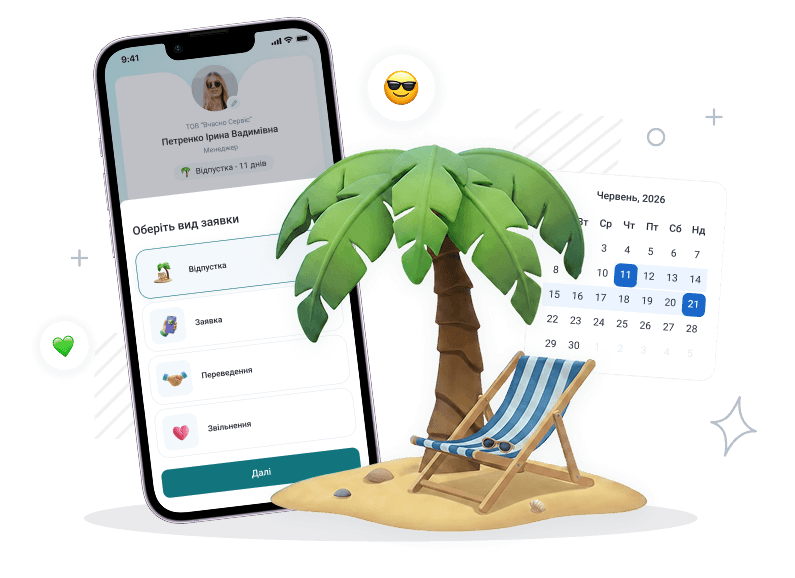
Paperless, Hassle-Free HR Record-Keeping
Vchasno.Kadry helps you quickly prepare documents, track deadlines, and store all employee HR records in one place
Learn More