Telegram







 Team roles
 Hiring practices
 HR cycle
 Vacation
 Applications
 Mobile App
 For Retail Chains
 For IT Companies
Content
- Introduction
- What Is a Probationary Period and Why Is It Necessary?
- Employee Rights During the Probationary Period
- Duration of a Probationary Period
- Who Cannot Be Placed on Probation?
- How to Formalize a Probationary Period: A Step-by-Step Guide
- Employment Order for Hiring with a Probationary Period
- Probationary Period vs. Internship: What Is the Difference?
- How to Streamline HR Documentation with Vchasno.Kadry service
- What Should Guide the Probationary Period: Legal Requirements or Company Policy?
- What Happens After the Probationary Period Ends?
- Can an Employee Resign During the Probationary Period?
A probationary period is a lawful mechanism for assessing whether an employee is suitable for a position. At the same time, it is a full-fledged period of employment: the employee receives a salary, enjoys all labor rights, and is protected by labor legislation.
In this article, we explain how to formalize a probationary period, what maximum duration is permitted by law, which categories of employees cannot be placed on probation, and what special rules apply during martial law.
What Is a Probationary Period and Why Is It Necessary?
A probationary period is a defined period during which an employer evaluates a new employee’s professional skills, ability to adapt, and capacity to perform the duties of the position. During this time, the employee also assesses whether the working conditions and the company’s corporate culture meet their expectations.
A probationary period is established by mutual agreement between the employer and the employee at the time of hiring in accordance with Article 26 of the Labor Code of Ukraine.
Different companies may refer to this period as an adaptation period, onboarding, or a probation period. However, from the perspective of labor law, what matters is the formal establishment of a probationary period, as specific legal rules govern its duration, documentation, and termination of employment.
Employee Rights During the Probationary Period
Employees on probation have the same rights as all other employees of the company. In particular, they:
- receive salary on the same terms as other employees;
- are entitled to sick leave benefits when statutory grounds exist;
- accrue annual leave entitlement;
- work according to the established work and rest schedule.
Duration of a Probationary Period
Ukrainian labor law establishes the following limits on the duration of a probationary period:
- for blue-collar workers (production employees) — no more than one month;
- for all other categories of employees — no more than three months;
- in certain cases — up to six months, subject to approval by the trade union.
If an employee is absent due to illness or other valid reasons, the probationary period may be extended by the corresponding number of days.
Who Cannot Be Placed on Probation?
Under normal circumstances, Article 26 of the Labor Code of Ukraine prohibits establishing a probationary period for the following categories of employees:
- individuals under 18 years of age;
- young specialists after graduating from educational institutions;
- persons discharged from military service or alternative (non-military) service;
- persons with disabilities referred for employment in accordance with recommendations issued by the Medical and Social Expert Commission (MSEC);
- employees transferred from another employer;
- candidates selected through a competitive recruitment process;
- employees hired under a fixed-term employment contract for up to 12 months.
At the same time, probationary periods during martial law are governed by special regulations. Law No. 2136-IX allows employers to establish a probationary period for any category of employee.
How to Formalize a Probationary Period: A Step-by-Step Guide
To rely on the results of a probationary period, the employer must properly document it.
Practical Steps
Reach an agreement during the job offer stage. Discuss the probationary period and its duration with the candidate before employment begins.
Prepare the hiring documents. If your company requires a job application, it may include information about the agreed probationary period.
Employment agreement. If the employment agreement is executed in writing, it is advisable to include a separate clause specifying the probationary period.
Issue the hiring order. The employer issues an employment order indicating the probationary period.
Familiarize the employee with the relevant documents. The employee must acknowledge the employment order, job description, internal labor regulations, and other applicable internal policies.
Important. The probationary period must be agreed upon and documented at the time of hiring. Once the employee has started work, it cannot be introduced later by means of an order or an additional agreement.
Employment Order for Hiring with a Probationary Period
The employment order serves as the official record of hiring an employee. If the probationary condition is not reflected in the employment documentation at the time the employment relationship is established, proving that such a condition existed may be difficult.
The key requirement is an explicit reference to the probationary period in the employment order.
Example wording:
«Hire [Employee’s Full Name] for the position of [Job Title] effective [Date], with a salary in accordance with the staffing schedule and a probationary period of three (3) months».
Probationary Period vs. Internship: What Is the Difference?
During a probationary period, the employee is already in an employment relationship with the employer, performs their job duties, and enjoys all employment rights and guarantees. Training, mentoring, or onboarding provided during this period does not change the employee’s legal status.
For example, if a company hires a sales manager with a probationary period, the individual is officially employed, has signed an employment agreement, receives a salary, independently negotiates with clients, and is responsible for achieving sales targets.
By contrast, if a company accepts a student to learn the fundamentals of a profession, where the student performs only training assignments for a week and bears no responsibility for operational activities, this constitutes an internship. An intern is not necessarily a full-fledged employee and is not always entitled to salary under the general labor law rules.
An internship may take place either within or outside an employment relationship, depending on its type and legal basis. A probationary period, however, always applies to an individual who has already been officially hired.
How to Streamline HR Documentation with Vchasno.Kadry service
When establishing a probationary period, HR professionals typically need to prepare and coordinate several documents, including a job application (if applicable), an employment agreement, an employment order, and other HR documents.
Vchasno.Kadry helps organize this process within a single digital environment. With the service, you can:
- prepare HR documents in a unified system;
- provide employees with documents for review and have them signed using a Qualified Electronic Signature (QES);
- use ready-made HR document templates;
- store documents in an electronic archive and quickly retrieve the information you need.
Using electronic HR document management helps accelerate the hiring process and reduce the risk of errors when preparing employment documents.
Hiring a new employee with Vchasno.Kadry service consists of the following steps:
- The personnel inspector enters the new employee’s phone number into the system.
- The employee receives a link to a questionnaire requesting the information required for employment. The questionnaire can be completed manually or populated via Diia Sharing. The employee may also upload photos or scans of documents, while AI-powered tools automatically extract the required data and populate the questionnaire.
- The personnel inspector receives a notification and reviews the completed questionnaire.
- If any documents are missing, the employee uploads them through the service.
- Based on the submitted information, the system automatically generates the job application, employment order, and Form P-2. The personnel inspector may also upload company-specific document templates in advance.
- The personnel inspector configures the document signing workflow.
- Managers sign the documents in the predefined sequence.
What Should Guide the Probationary Period: Legal Requirements or Company Policy?
To avoid misunderstandings, it is important to distinguish between statutory requirements and the company’s internal HR processes.
| Required by Law | Determined by Company Policy |
|
|
Important. Although the law does not require employers to establish KPIs for a probationary period, documented performance results may serve as valuable evidence in the event of an employment dispute concerning an employee’s suitability for the position.
What Happens After the Probationary Period Ends?
Once the probationary period expires, one of two scenarios applies.
The Employee Successfully Passes the Probationary Period
If the probationary period ends and the employee continues working, they are automatically considered to have successfully completed probation. No additional employment order is required.
In practice, an employer may also formally recognize the employee as having successfully completed the probationary period before its scheduled end by issuing the relevant order.
The Employee Fails the Probationary Period
If the employer reaches a well-founded conclusion that the employee is not suitable for the position or is unable to perform the assigned work, the employment agreement may be terminated pursuant to Clause 11, Article 40 of the Labor Code of Ukraine.
It is important for the employer to have documentation supporting this decision, such as performance evaluation results, internal memoranda, documented violations of job responsibilities, uncompleted assignments, or other evidence demonstrating the employee’s unsuitability for the position.
The employer must provide the employee with written notice of dismissal no later than three days before the dismissal date.
Can an Employee Resign During the Probationary Period?
Yes. An employee has the right to terminate the employment relationship during the probationary period in accordance with labor legislation.
The mere fact that an employee is serving a probationary period does not restrict their right to resign voluntarily or terminate the employment relationship on any other grounds provided by the Labor Code of Ukraine.
A probationary period upon hiring helps reduce risks for both the employer and the employee. The key is to properly document the probationary condition, comply with the statutory time limits, and ensure that the employee receives all employment guarantees provided by law.
Hiring new employees should not be time-consuming. Use modern digital tools such as Vchasno.Kadry to create, approve, sign, and store HR documents online.
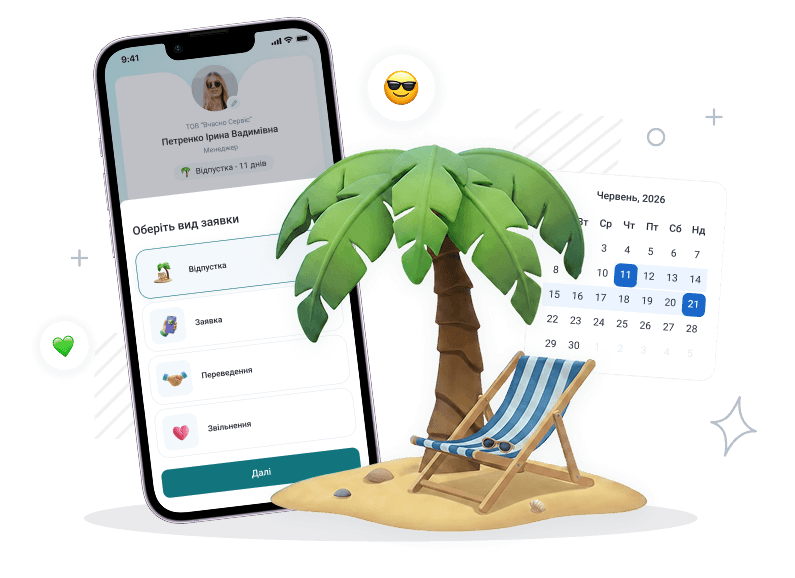
Vchasno.Kadry for modern onboarding
Collect documents, create HR orders, sign them online, and store them in a single system.
Learn More